
Choosing the right extensions is super important. There are many types of hair extensions, and you want them to blend with your natural hair, so they don’t even look like extensions.
You don’t want to see obvious signs of where the extensions start and stop, and you want the texture of the hair to mimic your own hair’s natural texture for a seamless blend.
The Different Types Of Hair Extensions
When you’re choosing hair extensions, there are a fair few types to choose from. There are clip-in, tape-in, sew-in, fusion (pre-bonded) and micro-link or nano-ring options, all of which have their own pros and cons.
The clip-in hair extensions work best for when you want quick application and flexibility too, as you can put them in and out yourself in just minutes.
Tape in styles lie flatter to your scalp, so they look more natural, whilst feeling lightweight and they work well if you want the semi-permanent wear but without the bulk of clip-in hair extensions.
Sew-ins use weft variations, where a stylist stitches onto braids, to give you secure and long-lasting wear which won’t just lip out easily.
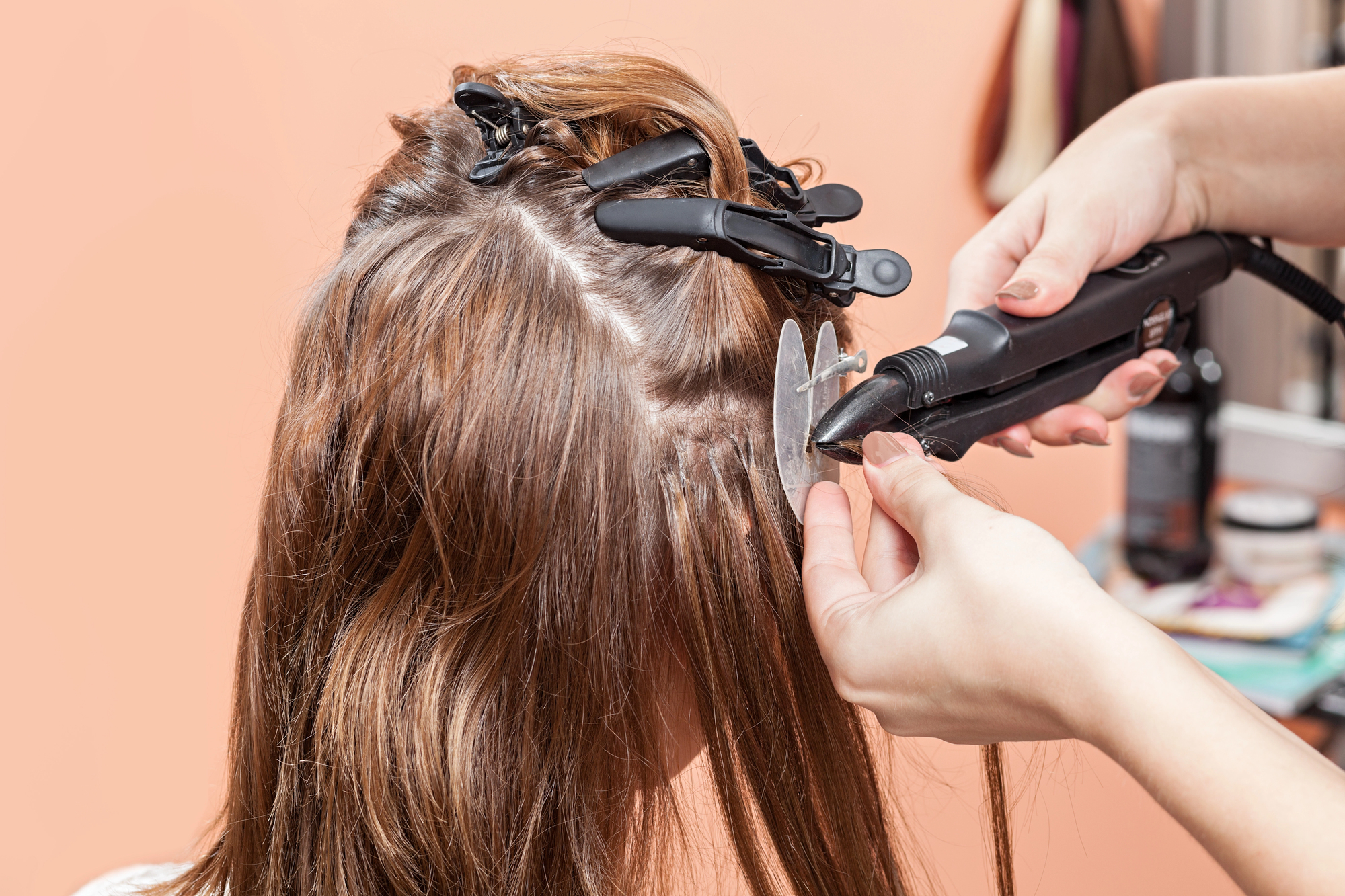
Fusion techniques use keratin bonds, and need professional application, but they look very discreet in your hair and give you very natural hair movement.
Micro link extensions (or nano rings) use tiny beads to attach to small strands of hair, without needing to use glue or heat. They can be easily adjusted but you need a stylist to help you remove them, as they are attached to small strands of your hair.
Choosing The Right Hair Texture For A Natural Blend
Once you’ve decided which type of hair extensions you want, you need to try and match the texture of the hair extensions to your own hair, so they look seamless once in.
Start by working out your natural hair texture – fine, medium or coarse, and then choose extensions that are going to mimic that texture. If you choose extensions that are too silky or too rough, compared to your hair hair, the extensions wont blend and will look too obvious.
You also need to consider your curl pattern. Whether your hair is straight, wavy, curly or coily, pick your extensions with that same pattern, so you don’t need constant heat styling, which can end up harming your natural hair.
The length of your hair extensions also matter, as longer extensions will put more weight onto your roots, which can be stressful if your natural hair is already fragile or thinning.
Think about the maintenance of the extensions. Textured hair extensions and curly hair extensions will need more moisturizing and careful detangling, whilst the straighter textures might need more frequent hair washing to keep them fresh.
Matching Hair Extensions To Your Natural Hair Color
To ensure your extensions blend in with your natural hair, rather than just sitting on top of it, you need to use smart color matching techniques.
Match the extensions to your mid-lengths and ends, and not your roots, as it’s those strands that will be sitting next to the extensions.
Make sure you’re careful with the undertone you choose. Decide if you hair leans warm, cool or neutral, and then you can choose shades that are the same undertone.
Check hair extensions swatches indoors, outdoors and near a window, as a shade that looks good in salon lighting can turn brassy or flat once you’re in daylight. If your hair color shifts with the seasons, think about the seasonal shades, like going slightly lighter for summer and slightly richer for winter.
If you have highlighted or dimensional hair, look for balayage blends or multi-tone extensions instead of a single and flat color. This kind of variation mimics the natural depth of your hair, helping you to achieve that seamless blend that doesn’t look like you’re wearing hair extensions.