
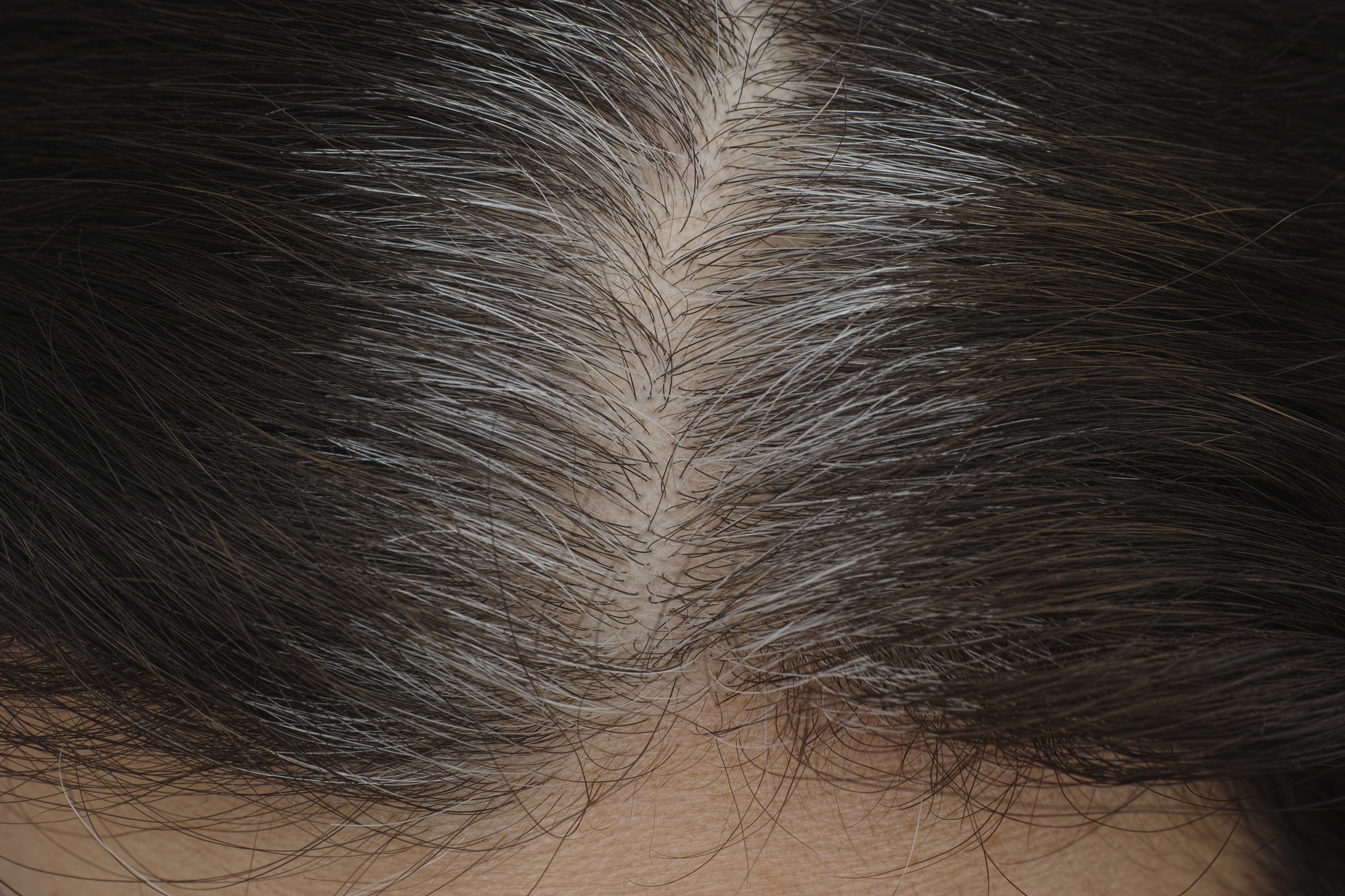
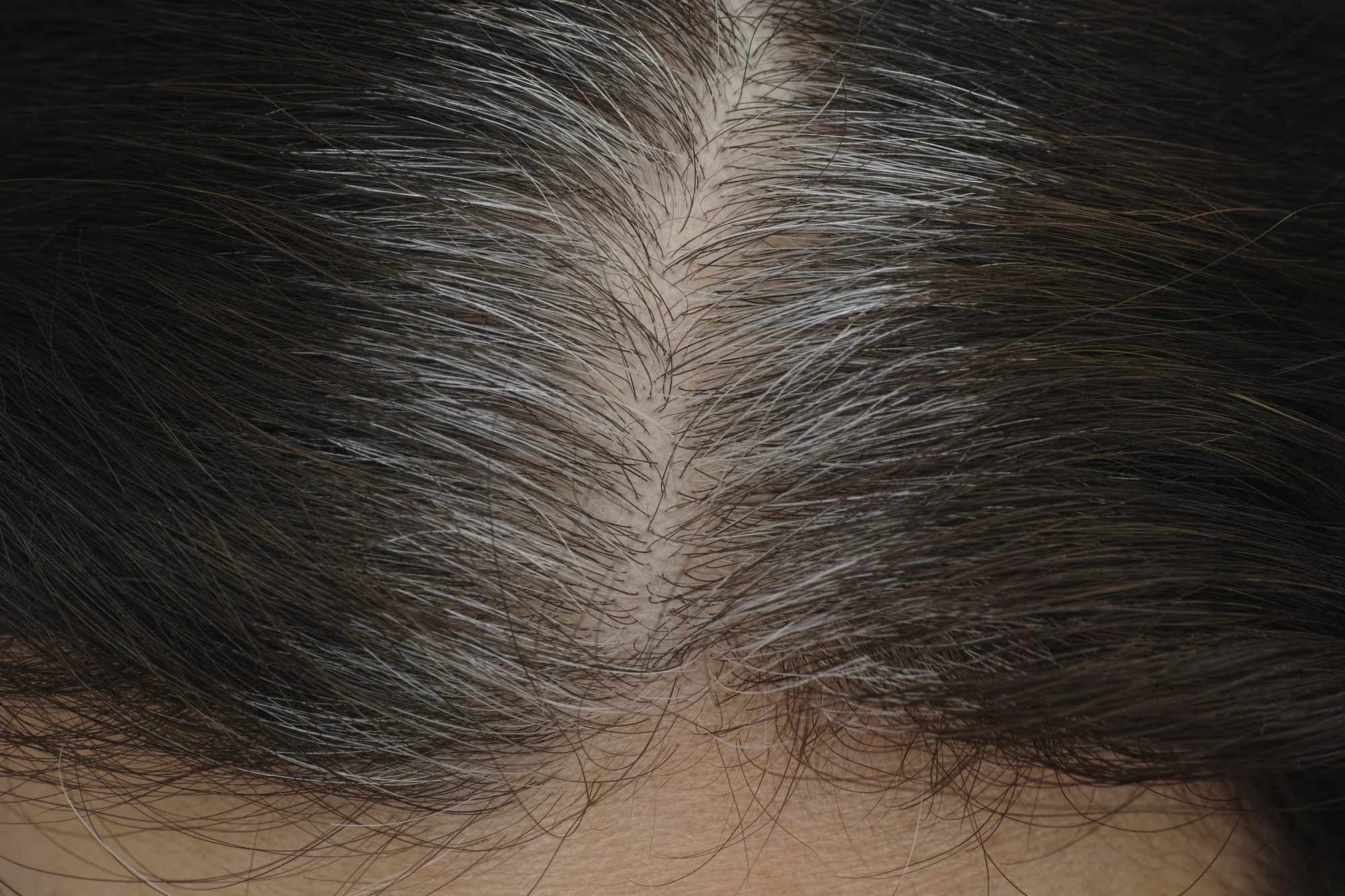
Grey hair is just part of the aging process, but the texture of grey hairs is completely different to our usual hairs. Grey hairs can feel coarse, wiry and harder to manage, so they can be harder to manage, and stand out, even when they’re short. Keep reading to find out why your grey hairs are thicker than your other hairs.
How Hair Texture Changes As We Age
As we age, hair changes both in color and texture. You’ll notice your stands becoming drier, rougher or more resistant to styling, even before visible greying appears.
Inside the hair follicles, melanocytes slow down, or stop producing pigment, whilst keratinocytes continue forming the hair shaft, often in a less uniform way.
The hair follicles also change shape over time. Instead of producing smooth, evenly rounded strands, aging hair can grow with an uneven structure, which increases friction, making hairs feel coarse when you run your fingers through them.
Aging also affects your scalp, with slower oil production. This can leave your hair feeling less lubricated, which emphasizes any roughness, making grey hairs stand out from the rest of your hair.
Why Are Grey Hairs Thicker Than Normal Hairs?
Grey hairs feel and look thicker than your normal hairs, but they’re not actually thicker. The difference is that grey hairs feel coarser or are more wiry, which gives the illusion that the grey hairs are thicker.
When the melanocytes within the hair follicle stop working, the hair loses eumelanin and pheomelanin, turning the hair grey or white. Without the pigment filling the hair shaft, light reflects differently, which can make the grey hairs appear thicker.
Why Grey Strands Can Turn Coarse Or Wiry
When your hair turns grey, the melanin loss changes more than just the color. The melanin helps to regulate moisture and surface smoothness, leaving your hair more exposed to dryness and friction. Hair will feel rougher, if it is not truly thicker.
Grey hair often shows changes in its keratin structure. Keratin proteins in the hair, can pack unevenly, as follicles age, altering the shape of your hair shaft, making hair feel stiffer and more wiry.
Best Ways To Soften Coarse Grey Hair
To soften your coarse grey hairs, you need to focus on moisture, gentle care and protection. Start by using a moisturizing shampoo and conditioner specifically designed for dry and/or aging hair.
Wash your hair less often, so you don’t strip away the oils, and choose formulas, if possible, without harsh sulfates. Always follow up with a conditioner that will add slip and reduce the friction of your grey hairs.
Use deep conditioning treatments once a week, with ingredients like shea butter, glycerin or ceramides, to help fill the gaps within the hair cuticle, improving smoothness and making your hair easier to manage.
Apply lightweight hair oils or leave-in conditioners to damp hair. Argan oil, jojoba oil and squalane all work well, as they soften the hair, without weighing it down. Focus the oils on your mid-lengths to ends, rather than the scalp to reduce product build-up.
Always use heat protection products in your hair, before using hot tools, as excess heat dries grey hair quickly, and increases the brittleness.
You can also sleep with a satin or silk pillowcase, which reduces friction of your hair whilst you sleep. Plus, avoid rough towel drying, as gentle towel drying reduces cuticle damage, and helps coarser grey hair to feel smoother.