
Having a dry and flaky scalp feels uncomfortable and it can be difficult to manage when it just keeps coming back.
It can also affect how clean, healthy and comfortable your hair feels between hair washes. Here are some tips that have helped me with my super dry scalp.
Most Common Causes For A Dry & Flaky Scalp
It can just feel like your scalp is just dry, but there’s usually a few causes for scalp flaking; harsh cleansing, irritation or an imbalance.
If you’re using shampoo too often, you use strong detergents or your scrub your scalp aggressively (guilty), you strip your scalp of its protective oils which disrupts your scalp’s health.
Product build-up is another major cause, as you can get build-up from your dry shampoo, styling products or heavy conditioners which can trap sweat and dead skin, making your scalp flakes even more noticeable.
You could have an issue where you’re reacting to fragrance, hair dye or your styling heat, which inflames your skin and boosts shedding. Plus, environmental factors like cold air, low indoor humidity and sun exposure all also dehydrate your scalp, while sweaty workouts or tight hats increase the friction.
Your diet can also play a role, as a low intake of essential fats, protein and your key micro-nutrients will weaken your skin’s barrier and slow the repair.
Being stressed and/or having poor quality sleep can make your scalp even more sensitive where mild dryness can end up with persistent flakes.
Ingredients That Can Help Soothe Scalp Dryness
When you work out what is causing your flakes (over cleansing, build-up irritation or environmental factors), you can choose the right ingredients that will calm any inflammation, reinforce your scalp’s barrier and restore the moisture.
Look for humectants (like glycerin and hyaluronic acid) to pull water into your tight and itchy skin, plus panthenol can soften the scalp to reduce the rough texture.
For sealing hydration into your hair and scalp, look for scalp moisturising oils like squalane, jojoba and sunflower oil, as they all mimic your scalp’s natural sebum to help reduce transepidermal water loss without feeling heavy, or greasy.
If you’ve got redness or it feels like it stings, soothing herbal extracts like aloe vera, calendula, oat, and chamomile can reduce the redness and calm your irritated scalp.
For a dry scalp that won’t improve, no matter what you’ve tried, look for hydrating scalp masks containing ceramides, cholesterol, and fatty acids, as they’re going to help rebuild your barrier, and niacinamide can balance sensitivity and improve resilience.
For more stubborn flakes, using gentle salicylic acid can loosen the dead skin, so the calming ingredients in your other haircare products will absorb better.
Did you know that The Ordinary Glycolic Acid 7% Exfoliating Toner can be used on your scalp as well as your skin? It can help rebalance, hydrate, and reduce dryness, and it helped my scalp issues so much.
The watery consistency means it spreads easily over the scalp, so you don’t need to use a lot, and it makes your scalp feel super clean, but reduces the flakes.
Haircare Habits That Could Be Making Your Flakes Worse
Your hair washing routine can cause a lot of scalp issues, like overwashing with hot water, doubling up on clarifying formulas or scrubbing a little too hard can all cause more flake issues.
Make sure you’re not rinsing your hair too quickly. If you leave residue, it’ll dull your hair and cling to your scalp. Using heavy styling products like hairspray or dry shampoo without fully cleansing will lead to the buildup itching and shedding.
Never skip a gentle scalp massage when shampooing your hair, as it’ll help improve circulation and give you a better lift-off of loose skin.
Using heated hair tools or wearing your hair in tight hairstyles will add friction and dryness – this is definitely my issue. I wear my hair up way too often, especially in the summer and that traction restricts blood flow, irritates follicles, and damages the skin barrier.
Another issue could be your skincare products you’re using on your face and around your hairline, could be reacting with your scalp, especially if you use a lot of products with skincare actives like acids or retinoids.
Haircare Ingredients To Avoid To Reduce The Flakes
It is recommended to try and avoid sulfates (SLS/SLES) where possible, when you’re dealing with a flaky scalp, as they have the tendency to strip your scalp’s natural oils, and leave your scalp feeling tight.
Formulas that are high in alcohol (like SD alcohol, denatured alcohol) will dehydrate your scalp and leave it feeling even more itchy.
Don’t skip a clarifying shampoo, as you want to get rid of the build-up, but only use them once a week so you’re not overstripping your scalp of moisture.
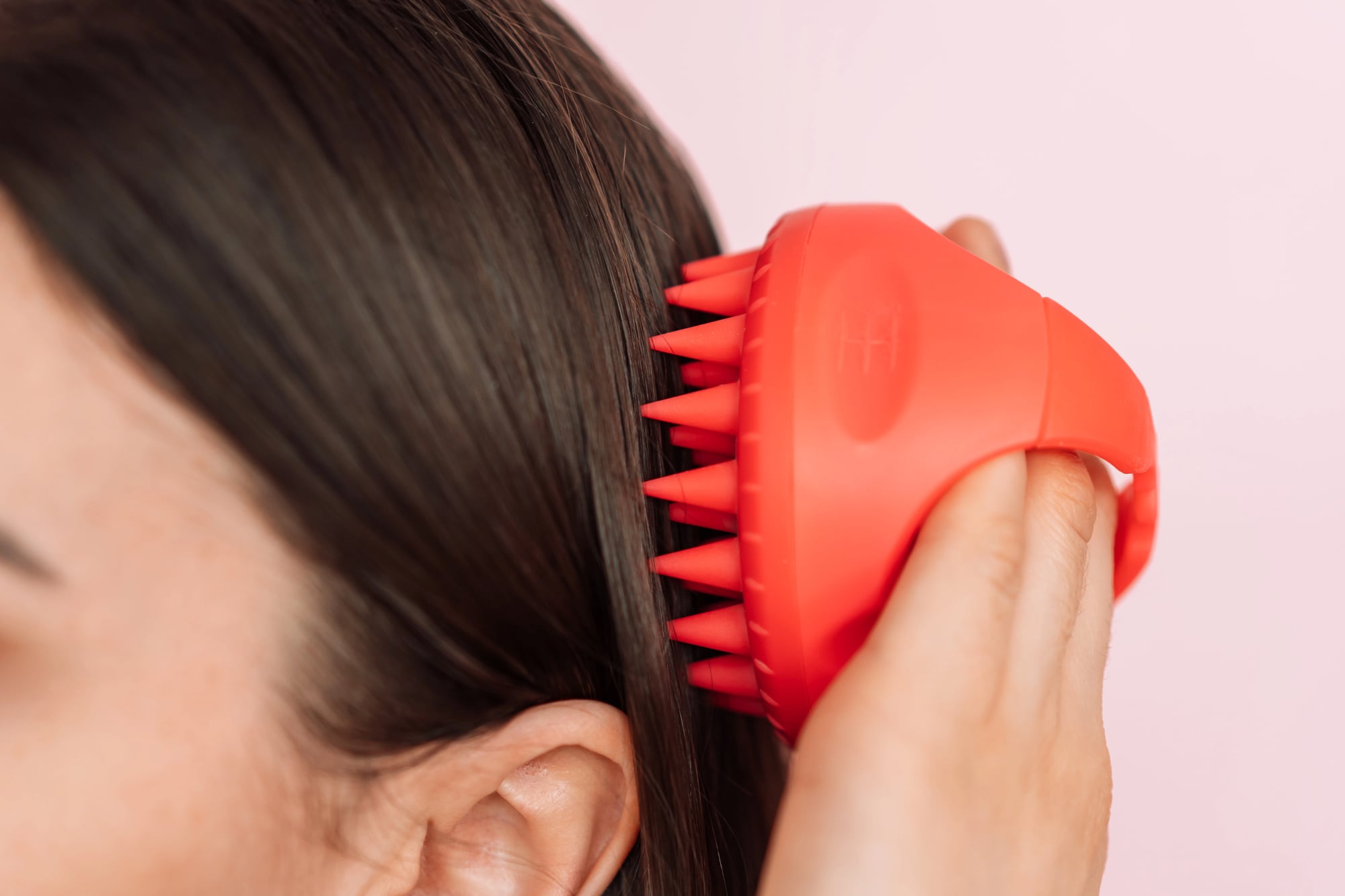
If you use scalp exfoliation products, avoid gritty scrubs and strong acids. I prefer to use a scalp massager brush, it has silicone spiky bristles that you use on your wet hair. It feels amazing and it’s a lot more gentle than a conventional, hard-to-wash-out scalp scrub (like the Ouai Scalp Scrub – I can never wash that out).