
Let’s be honest.
Most hair masks feel incredible on day one.
Silky. Glossy. Smoother than your hair has felt in months.
But then something strange happens.
By the third or fourth wash, that softness fades. Shine dulls. Ends feel rough again. You’re back to square one.
So what’s actually going on?
The Illusion of Instant Repair
Many high-performing masks rely on surface-level conditioning agents. These ingredients coat the cuticle, temporarily smoothing raised scales and filling microscopic gaps.
The result? Immediate slip and shine.
But coating is not reconstruction.
Hair isn’t just a strand you polish. It’s a layered biological composite:
- Cuticle (outer shield)
- Cortex (structural core)
- Medulla (central support layer)
Within this architecture lies a network of proteins and natural lipids working together to maintain flexibility, cohesion and moisture balance.
When hair is bleached, heat-styled or chemically processed, that internal architecture becomes destabilised — particularly the lipid layer that supports structural integrity.
A mask that smooths the surface can look transformative.
But if it doesn’t address internal architecture, results are often short-lived.
Why Results Fade After Washing
Water is a stress test.
If a mask relies heavily on surface film-formers, repeated washing gradually strips away that cosmetic layer.
What remains is the underlying structural state of the hair.
That’s why some masks:
- Feel amazing initially
- Lose impact after a few washes
- Require constant reapplication to maintain results
This isn’t necessarily bad formulation — it’s simply a different category of performance.
There’s a difference between cosmetic enhancement and structural reconstruction.
The Shift Toward Structural Durability
A new generation of treatments is being engineered with a different objective: not just instant feel, but durability under wash cycles.
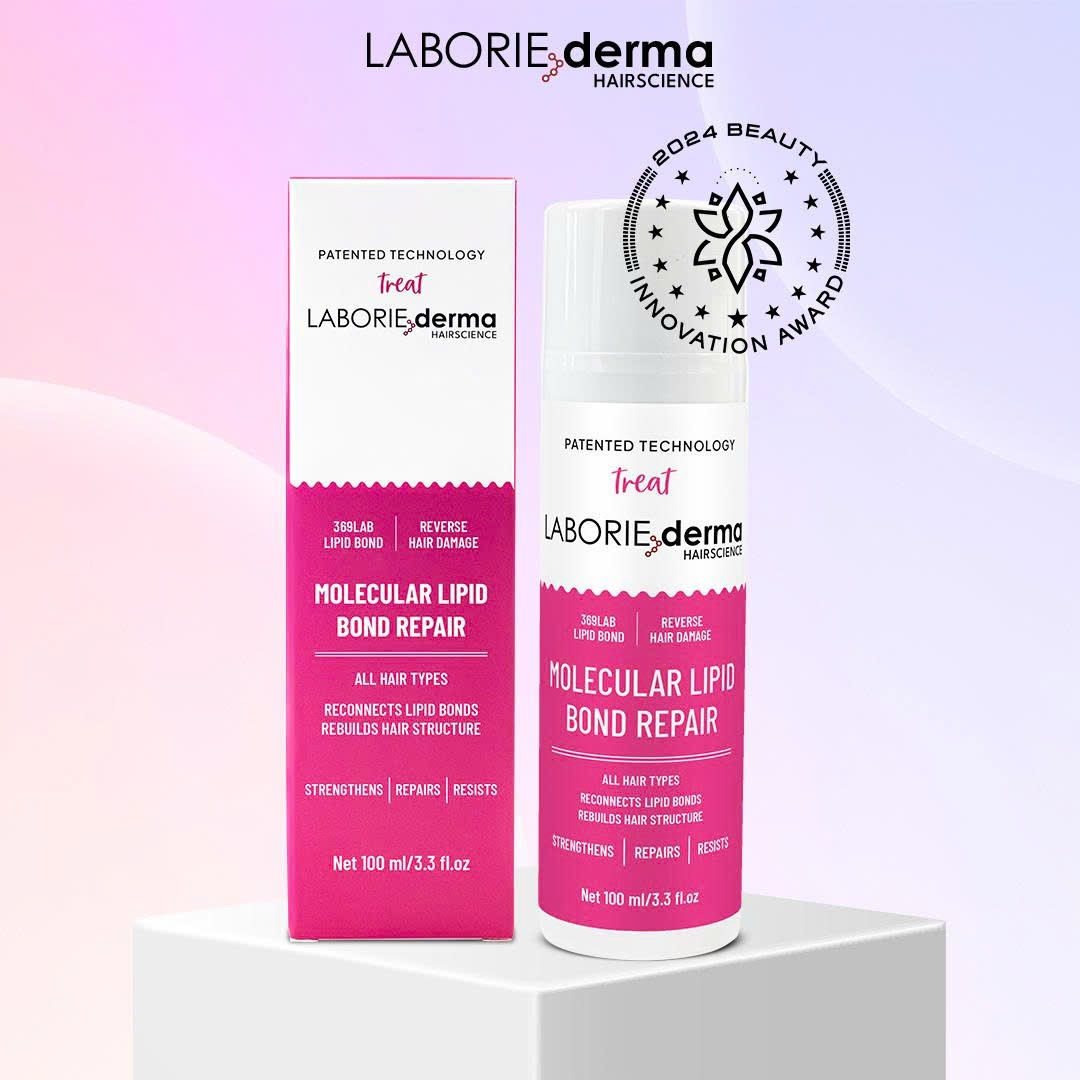
One example is LABORIE derma’s Hair Mask, built on its patented Lipid Bond Technology.
Rather than focusing solely on surface conditioning, the formula delivers micro-sized bio-identical lipid particles designed to biomimetically replicate natural hair lipids.
These particles are engineered to penetrate across the cuticle, cortex and medulla — with the goal of reconstructing the lipid–protein matrix that stabilises the fiber internally.
Why does that matter?
Because internal lipid stability influences:
- Elastic recovery
- Resistance to mechanical stress
- Moisture retention
- Long-term smoothness
Instead of coating over damage, the aim is to rebuild the environment that allows hair to behave like healthy fiber again.
Rebuild vs Reapply
Here’s the simplest way to think about it:
Temporary mask logic: Smooth → wash → reapply → repeat
Structural mask logic: Reconstruct → stabilise → maintain
A treatment that supports internal architecture may not rely on heavy surface films. That means it can feel lightweight — but perform longer.
Durability becomes the new luxury.
How to Tell If Your Mask Is Working Structurally
Ask yourself:
- Does elasticity improve, not just softness?
- Does hair retain flexibility after multiple washes?
- Does breakage reduce over time?
- Does the mask still “show up” after 5 washes?
True reconstruction reveals itself in behaviour, not just feel.
Hair that’s structurally stabilised:
- Bends without snapping
- Holds moisture longer
- Requires less frequent intervention
- Feels balanced rather than coated
The Future of Hair Masks
The next phase of premium haircare isn’t about heavier formulas or stronger fragrances.
It’s about architectural intelligence.
Bond builders defined the last decade. But the new frontier focuses on full fiber cohesion — proteins plus lipids working together.
LABORIE derma’s approach signals a quiet evolution in how we define repair.
Because the real test of a mask isn’t how it feels today.
It’s how your hair behaves next week.