
Whenever you’re packing your bags for a flight, it can feel overwhelming on what you can and can’t take with the rules and regulations.
Everyone packs toiletries and grooming products when traveling, but air travel gives you rules when traveling with certain types of bottles, cans and other products.
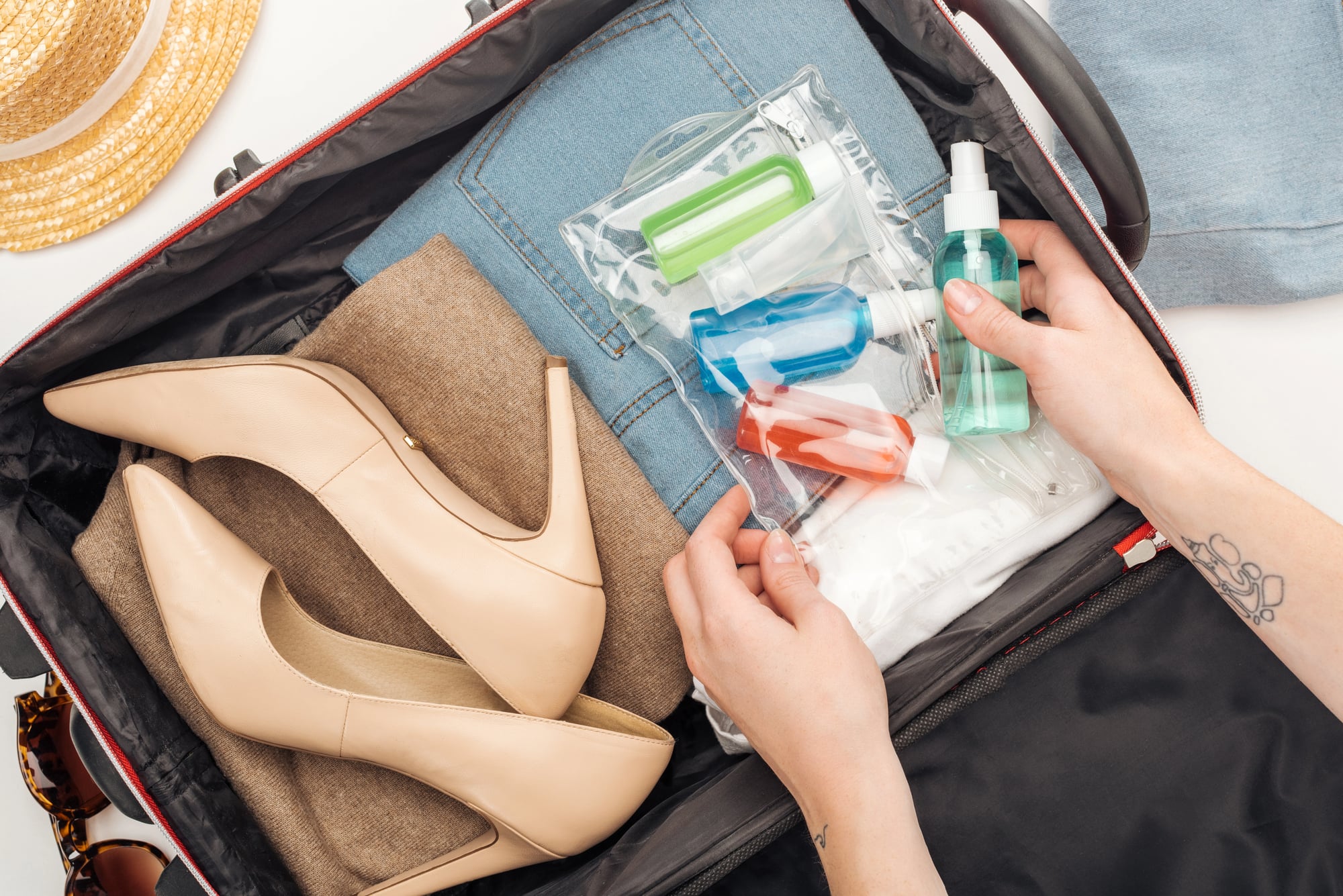
What Counts As An Aerosol When Flying?
You might think of aerosols as just hairspray, airlines and security agencies treat any product that dispenses a fine mist/spray from a pressurized container as being an aerosol.
They’re typically packaged in a metal canister with a valve button, and on the packaging it’ll say pressurized, spray or propellant.
The usual aerosols are deodorant spray, dry shampoo, shaving cream, spray sunscreen, spray paint, air freshener and cooking sprays.
Usually, aerosols also cover products that foam up or whip from a can, because you’re releasing the contents by using internal pressure, and with a button. If you cannot pour it out, and it sprays, mists or foams when pressed, you should treat it as an aerosol product.
Airline And Airport Rules For Aerosols In Checked Baggage
Once you’ve checked if an item is an aerosol, the next step is to work out if the aerosol can go in your checked baggage.
Start with the baseline security regulations, where only “personal care” aerosols are typically allowed, whilst flammables and industrial sprays often are not.
Many airports follow the TSA-style limits, but some airlines have stricter rules than other, so always check your airline’s list of dangerous goods before you fly, to see if you can or can’t take them.
Check the prohibited items categories that commonly include spray paint, cooking sprays with high flammability warnings, insecticides, fuel canisters and any aerosol labeled toxic, corrosive or explosive. If the can shows a hazard pictogram, or it says “extremely flammable”, you can expect the airline to say no.
How Aerosols Should Be Packed In Checked Baggage
Before packing an aerosol in your checked bag, when flying, carefully pack the aerosol to try and prevent an accidental discharge and leakage under pressure and temperature changes.
Start by checking the cap – if it is loose, tape it down, and use a travel lock if the nozzle has one. Put each can in a sealed zip-top bag, then wrap it up in clothing or bubble wrap to cushion any impacts.
Keep the aerosol type products separated from heat sources, like hair tools or battery packs, and then place them in the middle of your bag and not on the outer edge, just to keep them protected.
Don’t let any metal cans rub together, and avoid overstuffing your suitcase, so the aerosols don’t end up spraying inside your bag. If the can is partly used, pack it upright when possible to prevent damaged or dented containers when traveling.