
Fitting your own carpet is a great way to refresh a room, while keeping the costs under control. However, to get professional-looking results, it takes more than just simply laying the carpet down, and hoping for the best.
You need to do careful preparation and accurate measuring, as well as neat finishing, to give you a clean and secure fit for long-lasting results.
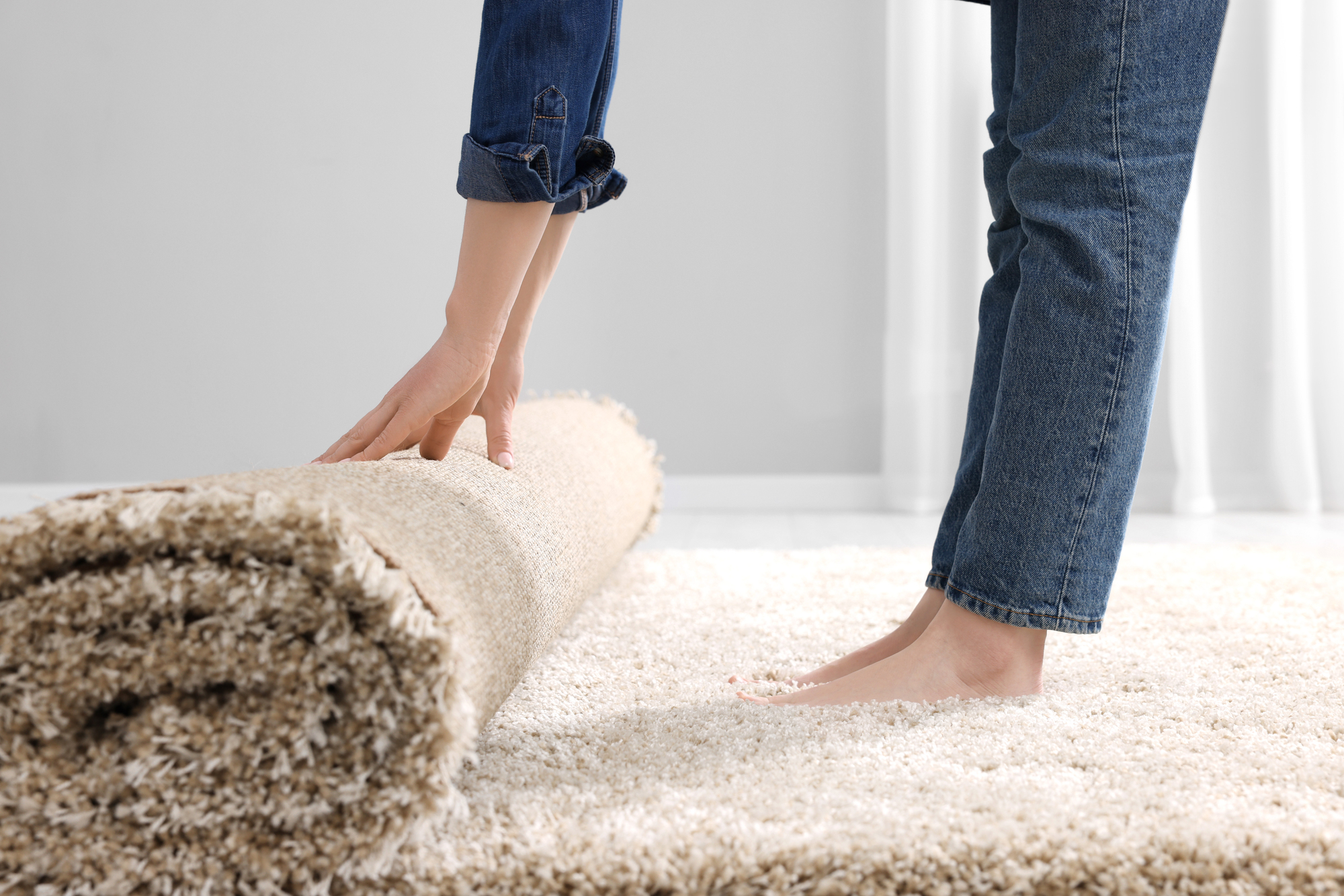
Getting The Room Ready Before You Start
Before you unroll your carpet, you need to strip the entire room back, so you’re working with a clean and clear workspace. Remove all furniture, where possible, so you don’t have to try and work around obstacles.
Take up any old floor coverings, tacks and staples, then sweep and vacuum thoroughly. You then need to wipe down all of your skirting boards and check for loose debris or dust that could cause bumps.
Look at the entire room layout and identify any alcoves, doorways or problem corners, so you can plan how you’re going to move and position your carpet, without dragging it over sharp edges. Open your windows or use a fan, so adhesive fumes and dust don’t build up whilst you’re working.
Make a simple tools checklist of things you’re going to need, like a sharp knife, knee pads, tape, hammer, pry bar and some rubbish bags. Lay all of the things within reach, so you can work smoothly without having to stop and hunt for items you’re going to need.
Measuring Up Properly For The Best Fit
Measurements are super important, and it’ll stop you making (costly) mistakes and awkward gaps.
Note the longest and widest room dimensions, including the door recesses, alcoves and any bay windows. Measure each wall at floor level, and double-check before you write anything down.
Lay out a quick sketch of the carpet layout, marking doors, radiators and fixed furniture pieces, so you know where the joins must fall, and where you’re going to need extra length for thresholds, and for trimming too.
You’re going to need a steel tape measure, notebook, pencil and calculator. Don’t do any guessing, and be careful not to mix metric and imperial measurements.
Choosing The Right Carpet For Your Space
Decide what kind of carpet material is going to suit the room or place you want to lay out. Nylon handles heavy foot traffic, polyester resists stains, whilst wool carpets feels luxurious and it also insulates well.
Once you know what material you want for the carpet, think about the color.
Lighter carpet colors can make rooms feel bigger and brighter, but they’re going to show up dirt easily, and you’ll often have to vacuum to keep it clean.
Darker color carpets will disguise marks better, but they can make a room feel smaller. Patterned carpets can disguise dirt, but they can also disguise wear too, especially in high footfall areas like hallways or landings.
You need to decide what kind of texture you want for your carpet. Twist piles will feel soft to walk on, loop piles resist crushing and textured styles will hide footprints and also vacuum lines.
Never forget a decent underlay for your carpet, as a denser underlay will improve the comfort of your carpet, as well as extending the carpet’s life and boosting sound insulation.
Preparing The Floor For A Smooth Finish
When you’ve chosen your perfect carpet, the results will depend on how well you’ve prepped the floor underneath.
Before you start with the carpet, you need to thoroughly clean the floor by vacuuming, and then removing any grease, dust, old adhesive or stray tacks.
Check for dips, humps or loose boards, and for effective surface leveling, you might need to sand high spots, screwing down any squeaky boards, or applying a self-leveling compound to any uneven concrete.
Carry out some moisture testing, especially if you have slabs underneath, or it’s a ground-level room.
To do this, use a moisture meter, or a taped plastic sheet on the ground. If you notice condensation forming, you will have to properly seal the floor, to ensure the moisture doesn’t damage your carpet.